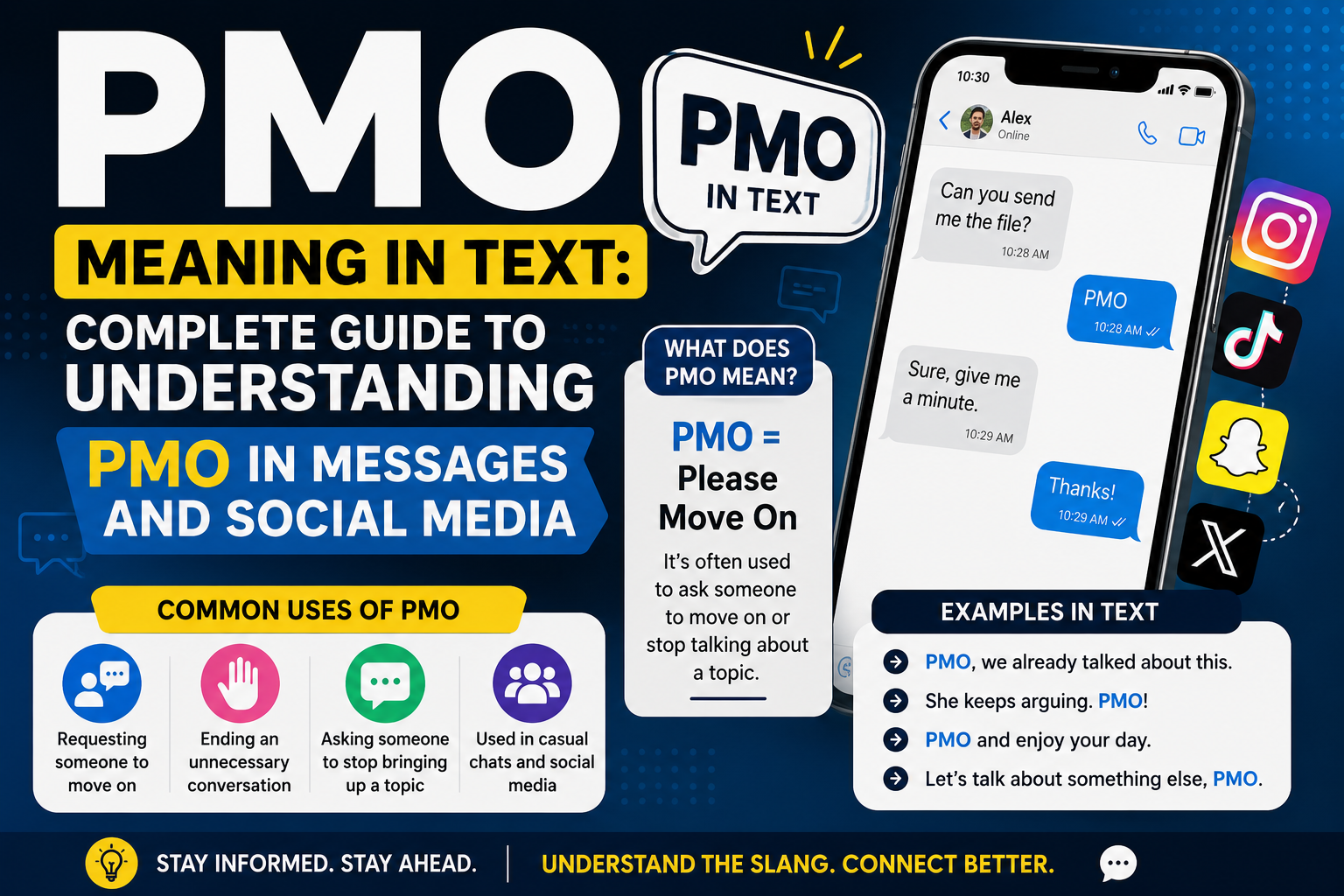
PMO Meaning in Text: Complete Guide to Understanding This Popular Internet Slang
If you’ve come across the term PMO in a text message, social media comment, or online conversation, you may be wondering what it means. Like many internet abbreviations, PMO can have different meanings depending on the context. Understanding these meanings can help you avoid confusion and communicate more effectively online.
The most common PMO meaning in text is “Put Me On.” This phrase is widely used on platforms like TikTok, Snapchat, Instagram, X, and messaging apps. People use it when they want recommendations, introductions, or information about something interesting.
However, PMO does not always mean the same thing. In some conversations, it can mean “Pisses Me Off,” while in professional environments, it often refers to a Project Management Office.
This guide explains everything you need to know about PMO meaning in text, including its origins, examples, social media usage, alternative definitions, and tips for understanding it correctly in any situation.
What Does PMO Mean in Text?
The most common definition of PMO in texting and social media is:
PMO = Put Me On
When someone says “PMO,” they are asking another person to recommend, introduce, or connect them to something valuable.
For example:
- PMO to some good movies.
- PMO to your playlist.
- PMO to some new restaurants.
In each example, the person wants recommendations or information.
Quick Definition
PMO stands for “Put Me On,” a popular slang phrase used to ask someone for recommendations, advice, introductions, or access to something they enjoy.
Where Did PMO Come From?
The phrase “Put Me On” existed long before social media. In everyday conversation, people used it to mean introducing someone to a new opportunity, person, trend, or source of information.
As texting and social media became more popular, users shortened the phrase to PMO. This abbreviation spread rapidly through online communities because it is short, convenient, and easy to understand.
Today, PMO is commonly used by younger audiences, content creators, and social media users around the world.
PMO Meaning on TikTok
TikTok is one of the biggest reasons PMO became popular.
On TikTok, PMO almost always means “Put Me On.”
Users often comment on videos asking creators to share more recommendations.
Examples include:
- PMO to songs like this.
- PMO to more creators like you.
- PMO to your skincare routine.
- PMO to the products you use.
These comments show that viewers want additional information or recommendations related to the content.
Why PMO Is Popular on TikTok
TikTok focuses heavily on discovery. Users constantly look for:
- New music
- Fashion trends
- Beauty products
- Books
- Movies
- Fitness routines
- Travel destinations
Because of this, PMO has become a natural part of the platform’s vocabulary.
PMO Meaning on Snapchat
On Snapchat, PMO usually has the same meaning.
Examples include:
- PMO to that filter.
- PMO to the song you posted.
- PMO to your favorite series.
Friends often exchange recommendations through private messages, making PMO a common abbreviation.
Snapchat conversations are typically fast and casual, so shortened phrases like PMO fit perfectly within the platform’s communication style.
PMO Meaning on Instagram
Instagram users frequently use PMO in comments, direct messages, and story replies.
Examples:
- PMO to your workout routine.
- PMO to those shoes.
- PMO to your editing apps.
- PMO to similar pages.
Influencers and creators receive PMO comments because followers want recommendations about products, services, and trends.
PMO Meaning on X (Twitter)
On X, PMO often appears in tweets discussing entertainment, fashion, sports, and technology.
Examples:
- PMO to some underrated artists.
- PMO to good podcasts.
- PMO to affordable laptops.
The abbreviation allows users to communicate quickly while staying within character limits.
Examples of PMO in Everyday Text Conversations
Music Recommendation
Person A: This artist is amazing.
Person B: PMO to more artists like them.
Meaning: Recommend similar artists.
Food Recommendation
Person A: I found the best pizza place.
Person B: PMO.
Meaning: Tell me where it is.
Movie Recommendation
Person A: That movie was incredible.
Person B: PMO to more movies like that.
Meaning: Suggest similar movies.
Fashion Recommendation
Person A: Nice jacket.
Person B: Thanks.
Person A: PMO to where you bought it.
Meaning: Tell me where you got it.
Alternative PMO Meaning: Pisses Me Off
Although “Put Me On” is the most common definition, PMO can also mean:
Pisses Me Off
This version is used to express frustration or annoyance.
Examples:
- Slow internet PMO.
- Fake people PMO.
- Being ignored PMO.
In these situations, PMO clearly refers to something that annoys the speaker.
How to Recognize This Meaning
Look for negative emotions in the sentence.
Examples:
- That really PMO.
- People who lie PMO.
- Traffic PMO every morning.
The tone of the conversation usually makes this meaning obvious.
PMO Meaning in Business
In professional settings, PMO often stands for:
Project Management Office
This has nothing to do with internet slang.
A Project Management Office is a department responsible for overseeing projects within an organization.
Its responsibilities may include:
- Project planning
- Resource allocation
- Risk management
- Budget monitoring
- Reporting
- Governance
Examples:
- The PMO approved the budget.
- Our PMO manages company-wide initiatives.
- The PMO requested an updated project report.
Whenever PMO appears in a workplace discussion, email, or business document, it usually refers to Project Management Office.
How to Tell Which PMO Meaning Is Being Used
Context is the key.
If Someone Wants Recommendations
PMO means Put Me On.
Example:
PMO to some good anime.
If Someone Is Complaining
PMO means Pisses Me Off.
Example:
Bad customer service PMO.
If the Topic Is Work
PMO means Project Management Office.
Example:
The PMO scheduled a project review.
Reading the surrounding conversation almost always reveals the intended meaning.
Why Internet Slang Like PMO Becomes Popular
Internet slang spreads because it saves time and makes conversations feel more casual.
PMO is popular because:
- It is short.
- It is easy to type.
- It communicates a complete idea quickly.
- It works across multiple platforms.
- Younger users adopt it easily.
Instead of writing:
Can you recommend something similar?
People simply type:
PMO.
This efficiency helps explain why internet abbreviations become mainstream so quickly.
Similar Slang Terms You Should Know
TBH
Means: To Be Honest
Example:
TBH, I didn’t enjoy the movie.
IMO
Means: In My Opinion
Example:
IMO, that’s the best restaurant in town.
SMH
Means: Shaking My Head
Example:
SMH, I can’t believe that happened.
FOMO
Means: Fear of Missing Out
Example:
Everyone is going to the concert and I have FOMO.
FR
Means: For Real
Example:
That show is amazing, FR.
Understanding these terms alongside PMO can help you navigate modern online conversations more confidently.
When Should You Use PMO?
PMO is appropriate in casual conversations such as:
- Text messages
- Social media comments
- Direct messages
- Group chats
- Online communities
It works best when asking for:
- Recommendations
- Advice
- Introductions
- Resources
- Information
Examples:
- PMO to some good books.
- PMO to your favorite travel destinations.
- PMO to quality headphones.
When You Should Avoid Using PMO
Avoid PMO in formal communication such as:
- Business proposals
- Academic papers
- Professional emails
- Official reports
Many people may not understand the abbreviation, especially in professional environments.
Using complete phrases is usually the better option in formal settings.
Common Mistakes People Make About PMO
Assuming It Always Means One Thing
PMO can have multiple meanings depending on the context.
Ignoring the Conversation Topic
The surrounding discussion often reveals the intended definition.
Using It in Professional Documents
Slang abbreviations can create confusion in formal communication.
Misinterpreting Social Media Comments
Many users assume PMO means “Pisses Me Off” when it actually means “Put Me On.”
Reading the entire conversation helps avoid misunderstandings.
Conclusion
The most common PMO meaning in text is “Put Me On,” a popular internet slang phrase used to request recommendations, introductions, advice, or information. It appears frequently on TikTok, Snapchat, Instagram, X, and messaging apps, making it one of the most recognizable abbreviations in modern online communication.
However, PMO can also mean “Pisses Me Off” in casual conversations or “Project Management Office” in professional settings. Because the abbreviation has multiple definitions, context is essential for understanding its intended meaning.
Whether you’re reading social media comments, texting friends, or participating in online discussions, knowing what PMO means will help you communicate more effectively and stay current with today’s digital language trends.
Frequently Asked Questions
What does PMO mean in text?
PMO most commonly means “Put Me On.” It is used when asking for recommendations, introductions, or advice.
What does PMO mean on TikTok?
On TikTok, PMO usually stands for “Put Me On” and is used when viewers want recommendations related to a video.
What does PMO mean on Snapchat?
On Snapchat, PMO generally means “Put Me On” and is used when asking friends for suggestions or information.
Can PMO mean something negative?
Yes. PMO can mean “Pisses Me Off” when expressing annoyance or frustration.
What does PMO mean in business?
In business environments, PMO stands for Project Management Office, a department responsible for project oversight and governance.
Is PMO slang?
Yes. When used as “Put Me On” or “Pisses Me Off,” PMO is considered internet slang.
Is PMO appropriate for formal communication?
No. Unless referring to a Project Management Office, PMO is generally too informal for professional writing.
How can I know which PMO meaning is correct?
Look at the context. Recommendations suggest “Put Me On,” complaints suggest “Pisses Me Off,” and workplace discussions usually refer to “Project Management Office.”