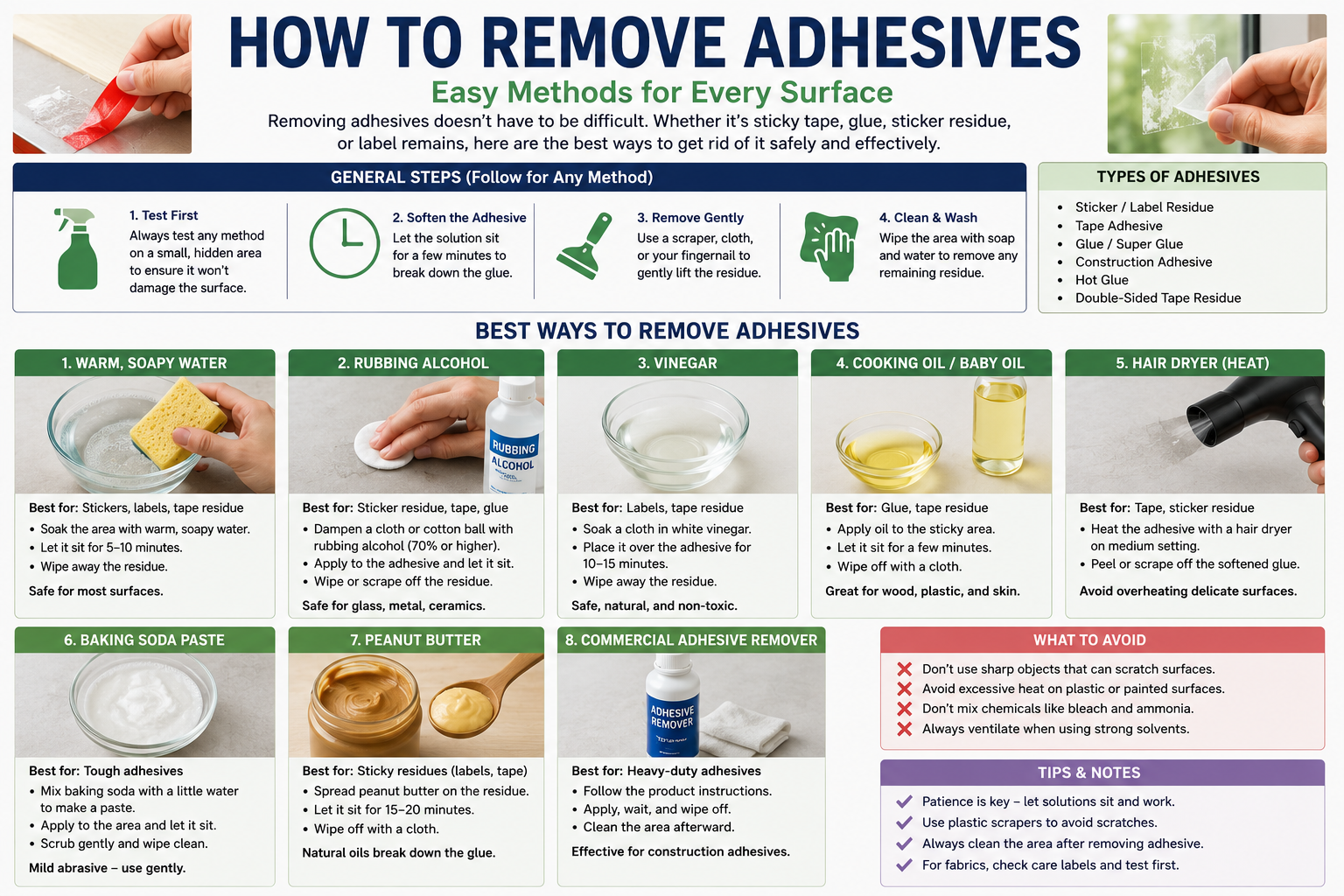
How to Remove Adhesives From Any Surface Without Causing Damage
Sticky adhesive residue can turn a simple cleanup into a frustrating project. Whether you’re peeling off an old label, removing construction adhesive, cleaning tape residue, or getting rid of glue left behind by stickers, knowing how to remove adhesives correctly can save both time and the surface underneath.
The challenge is that not all adhesives behave the same way. Pressure-sensitive adhesives from labels differ from super glue, epoxy, spray adhesive, and construction adhesives. Likewise, every surface responds differently to heat, moisture, chemicals, and scraping.
This guide explains the safest and most effective ways to remove adhesive residue from virtually every common household surface. You’ll also learn which products work best, which household items can help, and which mistakes often cause permanent damage.
Why Adhesives Become Difficult to Remove
Adhesives are designed to create a lasting bond. Over time, exposure to sunlight, humidity, heat, and oxidation can actually make many adhesives harder instead of weaker.
Common reasons adhesive becomes stubborn include:
- Age of the adhesive
- Heat exposure
- UV damage
- Moisture changes
- Chemical curing
- Porous surfaces absorbing glue
Understanding what type of adhesive you’re dealing with helps you choose the safest removal method.
Types of Adhesives You May Need to Remove
Different products require different approaches.
| Adhesive Type | Common Uses | Removal Difficulty |
|---|---|---|
| Sticker adhesive | Labels, decals | Easy |
| Tape adhesive | Packing tape, duct tape | Easy to Moderate |
| Spray adhesive | Craft projects | Moderate |
| Construction adhesive | Remodeling | Difficult |
| Epoxy | Repairs | Very Difficult |
| Super glue | Household fixes | Moderate |
| Hot glue | Crafts | Easy |
| Silicone adhesive | Bathrooms, kitchens | Moderate |
Essential Tools for Adhesive Removal
Before starting, gather a few basic supplies.
- Plastic scraper
- Microfiber cloth
- Hair dryer or heat gun
- Warm soapy water
- White vinegar
- Rubbing alcohol
- Mineral spirits
- Goo remover
- Baking soda
- Vegetable or olive oil
- Cotton balls
- Soft sponge
- Rubber gloves
Using the correct tools prevents scratches and surface damage.
Start With the Least Aggressive Method
Professionals always begin with the gentlest solution before moving to stronger solvents.
Follow this order:
- Warm water
- Dish soap
- Heat
- Cooking oil
- Vinegar
- Rubbing alcohol
- Commercial adhesive remover
- Strong solvents (only when necessary)
This approach minimizes the risk of damaging finishes or paint.
Remove Adhesive From Glass
Glass is one of the easiest materials to clean because it resists most solvents.
Method 1: Heat
Warm the adhesive using a hair dryer for 30 to 60 seconds.
Once softened:
- Lift an edge using a plastic scraper.
- Peel slowly.
- Wipe remaining residue with alcohol.
Method 2: Vinegar
Warm white vinegar loosens sticker residue effectively.
Steps:
- Soak a cloth in warm vinegar.
- Press onto the adhesive for several minutes.
- Wipe clean.
Method 3: Razor Blade
For stubborn residue on plain glass:
- Hold the blade nearly flat.
- Keep the glass wet.
- Scrape gently.
Avoid razor blades on coated or tinted glass.
Remove Adhesive From Plastic
Plastic scratches easily and may react with harsh chemicals.
Safe options include:
- Warm water
- Dish soap
- Vegetable oil
- Peanut butter
- Isopropyl alcohol (test first)
Avoid:
- Acetone
- Paint thinner
- Strong lacquer thinner
These can discolor or melt certain plastics.
Remove Adhesive From Wood
Wood requires extra care because finishes vary.
Finished Wood
Use:
- Mineral oil
- Olive oil
- Commercial adhesive remover
Allow the oil to sit for several minutes before wiping.
Unfinished Wood
Avoid soaking the surface.
Instead:
- Apply minimal rubbing alcohol.
- Scrape gently with plastic.
- Sand lightly if necessary.
Always wipe away excess moisture immediately.
Remove Adhesive From Painted Walls
Paint can peel if adhesive removal is too aggressive.
Best method:
- Warm with a hair dryer.
- Peel slowly.
- Wash with warm soapy water.
- Remove remaining residue using diluted vinegar.
Avoid excessive scrubbing.
Remove Adhesive From Metal
Metal usually tolerates stronger cleaners.
Good choices include:
- Mineral spirits
- WD-40
- Alcohol
- Adhesive removers
Finish by washing with dish soap to remove oily residue.
For stainless steel, wipe with the grain to prevent visible streaks.
Remove Adhesive From Fabric
Clothing requires patience.
Fresh Adhesive
- Blot immediately.
- Avoid rubbing.
- Wash with cold water.
Dried Adhesive
Freeze the fabric for one hour.
Then:
- Crack off hardened glue.
- Pretreat with stain remover.
- Wash according to the care label.
Avoid using hot water before the adhesive has been removed.
Remove Adhesive From Tile
Tile is durable and easy to clean.
Effective solutions include:
- Warm vinegar
- Baking soda paste
- Alcohol
- Commercial adhesive remover
Grout requires extra caution because aggressive scrubbing can erode it.
Remove Adhesive From Carpet
Adhesive trapped in carpet fibers requires gentle treatment.
Steps:
- Freeze hardened glue with ice.
- Lift carefully.
- Dab with rubbing alcohol.
- Blot using a clean cloth.
Never scrub aggressively, as this spreads the adhesive deeper into the fibers.
Remove Sticker Residue From Electronics
Electronics require extra caution because liquids can damage internal components.
Safest method:
- Turn off the device.
- Apply rubbing alcohol to a cloth, not directly onto the device.
- Wipe gently.
- Dry immediately.
Avoid excessive moisture around ports and buttons.
Household Products That Work Surprisingly Well
Many common kitchen products dissolve adhesives naturally.
Cooking Oil
Oil weakens many pressure-sensitive adhesives.
Best for:
- Labels
- Stickers
- Tape residue
Peanut Butter
Its natural oils help soften sticky residue.
Apply for several minutes before wiping away.
Baking Soda Paste
Mix baking soda with cooking oil.
This creates a mild abrasive suitable for many surfaces.
White Vinegar
Excellent for paper labels and light adhesive residue.
Lemon Oil
Natural citrus oils break down many glues while leaving a pleasant scent.
Commercial Adhesive Removers
Sometimes DIY methods aren’t enough.
Popular options include:
- Goo Gone
- Goof Off
- 3M Adhesive Remover
- WD-40 Specialist Cleaner
Always:
- Read the label.
- Test on a hidden area.
- Follow ventilation recommendations.
How Heat Helps Remove Adhesives
Heat softens many glues by reducing their bond strength.
Use:
- Hair dryer
- Heat gun on low setting
Avoid overheating:
- Plastic
- Vinyl
- Painted surfaces
- Electronics
Gentle, even heating usually works better than extreme temperatures.
Common Mistakes to Avoid
Many surfaces become permanently damaged because people rush the process.
Avoid these mistakes:
- Using metal scrapers on delicate materials
- Applying acetone to plastic
- Scrubbing aggressively
- Ignoring manufacturer instructions
- Mixing cleaning chemicals
- Using excessive heat
- Skipping a spot test
Patience usually produces better results than force.
How to Remove Construction Adhesive
Construction adhesive is much stronger than ordinary household glue.
Removal usually involves:
- Softening with heat.
- Cutting with a utility knife.
- Scraping carefully.
- Using a specialized adhesive solvent.
- Sanding remaining residue if appropriate.
Large areas often require mechanical removal tools.
How to Remove Super Glue
Super glue bonds rapidly and requires a different approach.
For skin:
- Soak in warm soapy water.
- Apply petroleum jelly or cooking oil.
- Separate gently.
For hard surfaces:
- Use acetone if the surface allows it.
- Scrape carefully after softening.
Never force bonded skin apart.
Best Solvents for Different Surfaces
| Surface | Recommended Solvent |
|---|---|
| Glass | Alcohol |
| Metal | Mineral spirits |
| Wood | Mineral oil |
| Plastic | Vegetable oil |
| Painted walls | Warm soapy water |
| Tile | Vinegar |
| Fabric | Rubbing alcohol |
| Electronics | Isopropyl alcohol |
Prevent Adhesive Residue in the Future
Removing adhesives becomes easier when residue never has the chance to harden.
Helpful habits include:
- Peel labels while they’re still fresh.
- Store products away from direct sunlight.
- Clean sticky residue immediately.
- Use removable adhesives when possible.
- Keep adhesive removers available for quick cleanup.
When Professional Help Is Worth It
Some situations require expert assistance.
Consider professional removal when:
- Hardwood flooring is involved.
- Antique furniture needs cleaning.
- Vehicle paint could be damaged.
- Stone countertops have cured epoxy.
- Large construction adhesive areas require removal.
Professionals have access to specialty solvents and equipment that reduce the risk of permanent damage.
Frequently Asked Questions
What removes adhesive residue the fastest?
For most surfaces, rubbing alcohol combined with gentle heat removes sticker residue quickly. Cooking oil also works well on labels and tape adhesive.
Can vinegar remove adhesive?
Yes. White vinegar softens many paper labels and light adhesive residue. It works especially well on glass, tile, and some metal surfaces.
Is acetone safe for every surface?
No. Acetone can damage plastic, painted finishes, varnished wood, and certain synthetic materials. Always test it in a hidden area first.
Does heat make adhesive easier to remove?
Yes. Gentle heat softens many adhesives, allowing them to peel away more easily with less scraping.
What should I never use to remove adhesives?
Avoid sharp metal tools on delicate surfaces, harsh abrasives, and strong solvents that aren’t recommended for the material you’re cleaning. These can cause scratches, discoloration, or permanent damage.
Conclusion
Learning how to remove adhesives safely is less about finding one miracle product and more about matching the right method to the surface and adhesive type. Starting with gentle techniques like warm water, heat, cooking oil, or vinegar often solves the problem without risking damage. When tougher adhesives remain, stronger solvents and commercial removers can help, provided they’re used carefully and tested first.
With patience, the proper tools, and the techniques outlined in this guide, you can remove adhesive residue from glass, wood, plastic, metal, fabric, walls, tile, and many other surfaces while preserving their appearance. Whether you’re tackling old stickers, tape residue, construction adhesive, or stubborn glue, following the correct process ensures cleaner results and fewer costly mistakes.