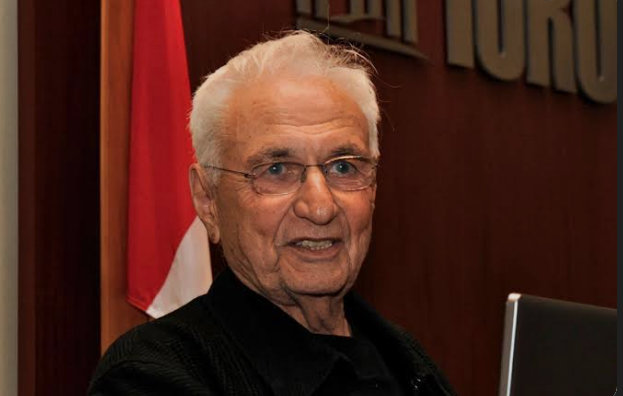
Frank Gehry: Biography, Iconic Buildings, Design Philosophy, and Lasting Architectural Legacy
Few architects have transformed the skyline of modern cities as dramatically as Frank Gehry. Known for bold curves, sculptural forms, and groundbreaking use of materials, he has redefined contemporary architecture over the past several decades. His buildings often blur the line between engineering, art, and architecture, creating landmarks that attract millions of visitors every year.
From museums and concert halls to universities and commercial developments, Gehry’s work has influenced architects worldwide. His innovative approach challenged traditional design principles and proved that buildings could be both functional and artistic masterpieces.
This comprehensive guide explores his life, architectural philosophy, famous projects, design methods, awards, controversies, and the lasting impact he has had on global architecture.
Who Is Frank Gehry?
Frank Gehry is a Canadian-born American architect widely recognized as one of the most influential designers of the modern era. His work is famous for unconventional forms, flowing metallic surfaces, and expressive structures that appear to move even while standing still.
Born on February 28, 1929, in Toronto, Canada, he later moved to Los Angeles, where much of his early architectural career developed. Over time, his distinctive style gained worldwide recognition, earning him some of architecture’s highest honors.
Rather than following traditional geometric forms, Gehry often experiments with asymmetrical shapes, fragmented volumes, and innovative materials that transform buildings into works of public art.
Quick Facts
| Detail | Information |
|---|---|
| Full Name | Frank Owen Gehry |
| Born | February 28, 1929 |
| Birthplace | Toronto, Canada |
| Nationality | Canadian-American |
| Profession | Architect |
| Architectural Style | Deconstructivism, Contemporary Architecture |
| Notable Award | Pritzker Architecture Prize |
| Firm | Gehry Partners LLP |
Early Life and Education
Frank Gehry spent his childhood in Toronto before his family relocated to California during his teenage years.
Growing up, he enjoyed building miniature cities from scraps of wood and other household materials. Those early creative experiences helped shape his imagination and later inspired his unconventional architectural thinking.
He attended Los Angeles City College before earning a degree in architecture from the University of Southern California. Following graduation, he worked for several architectural firms while also studying urban planning at Harvard University, although he did not complete that program.
These experiences exposed him to different architectural philosophies and helped him develop a style that eventually broke away from conventional modernism.
How Frank Gehry Developed His Signature Style
Most architects begin with orderly lines and symmetrical forms. Gehry chose a different direction.
His designs embrace movement, unpredictability, and emotion. Instead of seeing architecture as simple construction, he treats buildings as sculptures that interact with their surroundings.
Several characteristics define his work:
- Curved and flowing exteriors
- Complex geometric forms
- Titanium, stainless steel, and glass facades
- Dynamic interior spaces
- Creative use of natural light
- Integration of art and architecture
- Advanced digital design technology
Rather than forcing buildings into standard shapes, Gehry designs structures that reflect creativity and freedom.
The Philosophy Behind His Architecture
Gehry believes architecture should evoke emotion instead of merely serving practical needs.
His projects often seek to surprise visitors through unexpected shapes, dramatic entrances, and constantly changing perspectives.
Several principles influence his work:
Architecture as Art
Many of his buildings resemble giant sculptures. He often begins with hand sketches and physical models rather than computer-generated plans.
Human Experience Comes First
Despite their unusual appearance, Gehry’s buildings are designed around how people move, gather, and interact inside them.
Innovation Through Technology
His firm became one of the earliest architecture practices to adopt advanced digital modeling software, allowing engineers to construct highly complex shapes with precision.
Breaking Architectural Rules
Rather than following accepted design conventions, Gehry continuously challenges them.
This willingness to experiment has become one of his defining strengths.
Most Famous Frank Gehry Buildings
Many of Gehry’s projects have become internationally recognized landmarks.
Guggenheim Museum Bilbao
Located in Spain, this museum transformed the city into a global cultural destination.
Its shimmering titanium panels reflect changing sunlight throughout the day, making the building appear different from every angle.
The museum’s success also introduced the term “Bilbao Effect,” describing how iconic architecture can stimulate tourism and economic growth.
Walt Disney Concert Hall
Situated in downtown Los Angeles, this concert hall combines striking architecture with world-class acoustics.
Its sweeping stainless-steel exterior has become one of California’s most recognizable landmarks.
Inside, the concert hall provides an intimate musical experience despite its large seating capacity.
Fondation Louis Vuitton
Located in Paris, the museum resembles enormous glass sails floating above landscaped gardens.
The design combines transparency, light, and movement while housing major contemporary art exhibitions.
Dancing House
Found in Prague, the Dancing House appears as two buildings dancing together.
Its playful appearance contrasts with the surrounding historic architecture while respecting the city’s urban fabric.
Vitra Design Museum
Located in Germany, this museum marked one of Gehry’s earliest internationally celebrated projects.
Its white plaster forms introduced many concepts that later appeared in his larger works.
8 Spruce Street
This residential skyscraper in New York City features rippling stainless-steel surfaces that create changing shadows throughout the day.
It demonstrates how Gehry adapted his sculptural approach to high-rise residential architecture.
Notable Projects Around the World
Gehry’s portfolio extends across multiple continents.
Some significant works include:
- Museum of Pop Culture, Seattle
- Weisman Art Museum, Minneapolis
- Lou Ruvo Center for Brain Health, Las Vegas
- Dr. Chau Chak Wing Building, Sydney
- Ray and Maria Stata Center at MIT
- Biomuseo, Panama City
- IAC Building, New York
- DZ Bank Building, Berlin
Each project reflects its local culture while maintaining Gehry’s distinctive architectural language.
Materials That Define His Buildings
One reason Gehry’s work stands apart is his innovative use of materials.
Common materials include:
- Titanium
- Stainless steel
- Glass
- Concrete
- Limestone
- Wood
- Zinc
- Aluminum
These materials allow curved forms while reflecting natural light in constantly changing ways.
Titanium, in particular, became closely associated with his architecture after the success of the Guggenheim Museum Bilbao.
How Technology Changed Gehry’s Design Process
Many of Gehry’s buildings would have been impossible to construct using traditional drafting methods.
His office pioneered the use of sophisticated 3D modeling software originally developed for the aerospace industry.
Digital tools allow engineers to:
- Calculate complex structural systems
- Manufacture curved steel precisely
- Reduce construction errors
- Coordinate large international teams
- Improve construction efficiency
Technology enabled Gehry to transform artistic sketches into buildable structures.
Why the Guggenheim Bilbao Changed Architecture
The Guggenheim Museum Bilbao represents one of the most influential buildings of the twentieth century.
Its impact extended beyond architecture.
The museum:
- Revitalized Bilbao’s economy
- Increased international tourism
- Generated billions in economic activity
- Inspired cities to invest in landmark architecture
- Demonstrated architecture’s role in urban regeneration
Many urban planners continue studying the project’s success as an example of cultural investment driving economic development.
Awards and Recognition
Throughout his career, Gehry has received numerous honors.
Some of the most prestigious include:
- Pritzker Architecture Prize
- Presidential Medal of Freedom
- AIA Gold Medal
- Praemium Imperiale
- Royal Gold Medal
- National Medal of Arts
These awards recognize both his architectural innovation and his contribution to global culture.
Criticism and Controversies
Although widely admired, Gehry’s work has also received criticism.
Some common concerns include:
High Construction Costs
Many projects require advanced engineering and custom fabrication, increasing costs.
Maintenance Challenges
Complex forms sometimes require specialized maintenance over time.
Practicality
Critics occasionally argue that sculptural appearance takes priority over functionality.
Urban Context
Some believe certain projects contrast too strongly with surrounding historic neighborhoods.
Despite these criticisms, supporters argue that innovation naturally invites debate and that Gehry’s work has expanded architectural possibilities.
Frank Gehry’s Influence on Modern Architecture
Few architects have influenced contemporary design as profoundly.
His contributions include:
- Popularizing sculptural architecture
- Expanding digital architectural design
- Encouraging artistic freedom
- Inspiring younger architects
- Bridging engineering and art
- Transforming cities through landmark buildings
Many leading architects acknowledge Gehry’s impact on their own creative development.
Lessons Architects Can Learn From Gehry
Professionals and architecture students continue studying his methods.
Important lessons include:
- Creativity often begins with experimentation.
- Technology should enhance imagination rather than replace it.
- Great architecture balances beauty with functionality.
- Risk-taking can produce groundbreaking innovation.
- Every project deserves its own unique identity.
These principles remain relevant regardless of architectural style.
Frank Gehry’s Lasting Legacy
As one of the defining architects of the modern era, Gehry leaves behind more than iconic buildings.
He transformed public expectations of architecture itself.
Before his rise, many buildings emphasized efficiency and symmetry. Gehry demonstrated that architecture could inspire emotion, attract tourism, stimulate economic growth, and become a city’s defining symbol.
His influence reaches beyond individual structures into urban planning, engineering, digital modeling, and architectural education.
Even after decades of practice, his work continues inspiring designers to think beyond traditional limitations.
Frequently Asked Questions
Why is Frank Gehry famous?
He is famous for designing sculptural buildings with flowing forms, innovative materials, and groundbreaking engineering that changed contemporary architecture.
What architectural style is Frank Gehry known for?
He is most closely associated with Deconstructivism and contemporary architecture, although his work often combines artistic sculpture with advanced engineering.
What is Frank Gehry’s most famous building?
Many experts consider the Guggenheim Museum Bilbao his most influential project because of its architectural innovation and economic impact on the city.
Did Frank Gehry win the Pritzker Prize?
Yes. He received the Pritzker Architecture Prize in 1989, one of the highest honors in architecture.
What materials does Frank Gehry commonly use?
His projects frequently incorporate titanium, stainless steel, glass, concrete, aluminum, wood, and stone to create distinctive sculptural forms.
Conclusion
Frank Gehry has reshaped the world of architecture through fearless creativity, technical innovation, and a commitment to designing buildings that inspire curiosity and emotion. His portfolio includes some of the most recognizable landmarks on the planet, each reflecting a unique vision rather than a repeated formula.
From the transformative Guggenheim Museum Bilbao to the elegant Walt Disney Concert Hall, his projects demonstrate how architecture can influence culture, tourism, economics, and public life. His pioneering use of digital technology, unconventional materials, and sculptural forms has expanded the possibilities of modern design and inspired generations of architects.
Whether you are an architecture student, design enthusiast, traveler, or industry professional, studying Frank Gehry offers valuable insight into how imagination, engineering, and artistic ambition can come together to create buildings that stand the test of time.
Related Posts

Wednesday Addams

Billboard Hot 100