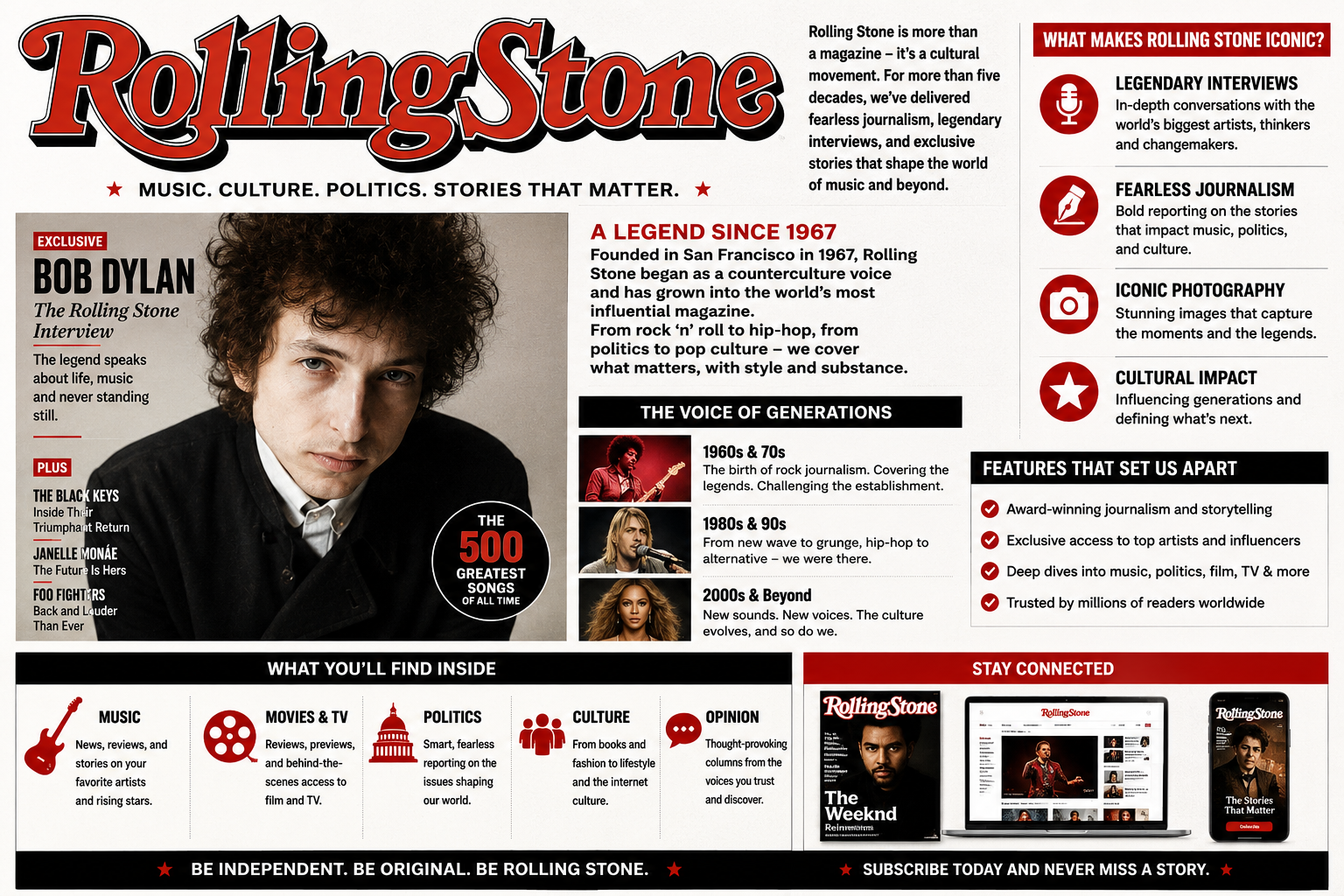
Rolling Stone Magazine: A Complete Guide to Its History, Influence, and Lasting Legacy
Rolling Stone Magazine has remained one of the world’s most influential entertainment publications for more than five decades. From groundbreaking interviews with legendary musicians to powerful investigative journalism and cultural commentary, the magazine has consistently shaped conversations around music, politics, film, television, and popular culture.
Whether you’re interested in its iconic covers, famous album rankings, exclusive celebrity interviews, or its impact on music journalism, this guide explores everything you need to know. You’ll also learn how the publication evolved from a counterculture magazine into a globally recognized media brand while continuing to influence artists, fans, and the entertainment industry.
What Is Rolling Stone Magazine?
Rolling Stone Magazine is an American monthly publication focused primarily on music, entertainment, politics, and popular culture. Founded in 1967, it quickly became known for combining serious journalism with in-depth reporting on the rapidly changing cultural landscape.
Unlike many entertainment magazines that focused mainly on celebrity gossip, Rolling Stone established itself through thoughtful storytelling, investigative reporting, and detailed artist profiles.
Today, its content includes:
- Music news
- Album reviews
- Movie and television reviews
- Political reporting
- Celebrity interviews
- Cultural commentary
- Festival coverage
- Exclusive investigations
- Lifestyle features
Its digital platform has expanded its audience worldwide while maintaining the publication’s recognizable editorial voice.
The History of Rolling Stone Magazine
The Beginning in 1967
The magazine was founded in San Francisco during one of the most transformative periods in American music history.
Its creators wanted a publication that documented the rapidly growing rock music movement while also examining the social and political changes happening across the country.
The first issue featured legendary musician John Lennon on the cover, immediately establishing the publication’s connection to major cultural figures.
What began as a niche music publication soon became an essential source for anyone interested in entertainment and youth culture.
Growth During the 1970s
The 1970s marked a period of tremendous growth.
During this decade, the magazine became known for:
- Long-form journalism
- Artist interviews
- Music criticism
- Political reporting
- Investigative stories
- Behind-the-scenes concert coverage
Readers appreciated the publication because it treated musicians as influential cultural figures rather than simply entertainers.
Expansion Beyond Music
Although music remained its foundation, the magazine gradually expanded into broader entertainment coverage.
Today it regularly covers:
- Hollywood films
- Television series
- Streaming entertainment
- Technology
- Politics
- Social issues
- Sports
- Business trends
This broader editorial approach helped the publication remain relevant as media consumption evolved.
Why Rolling Stone Magazine Became So Influential
Several factors explain why the magazine became one of the most respected names in entertainment journalism.
High-Quality Interviews
Its interviews often reveal personal stories, creative processes, career struggles, and social perspectives that are rarely discussed elsewhere.
Many celebrity interviews have become historical documents that fans continue to reference decades later.
Trusted Music Criticism
Album reviews have long influenced listeners deciding what music to explore.
Rather than offering simple ratings, critics often analyze:
- Songwriting
- Production
- Musical innovation
- Cultural relevance
- Long-term influence
These reviews frequently shape public discussion around new releases.
Long-Form Journalism
One defining characteristic is its commitment to detailed storytelling.
Instead of publishing only short news updates, the magazine often produces feature-length articles that provide historical context, interviews, and investigative reporting.
This depth distinguishes it from many entertainment websites.
The Most Iconic Magazine Covers
One of the publication’s biggest strengths has always been its unforgettable cover photography.
Over the decades, covers have featured some of the biggest names in entertainment.
Among the most memorable subjects are:
- The Beatles
- Michael Jackson
- Madonna
- Bruce Springsteen
- Prince
- David Bowie
- Taylor Swift
- Beyoncé
- Lady Gaga
- Kendrick Lamar
- Billie Eilish
- Harry Styles
These covers often become collectible pieces of music history.
Famous Music Rankings
Perhaps nothing generates more discussion than the publication’s famous rankings.
Popular lists include:
Greatest Albums of All Time
One of the most debated rankings in music history.
The list considers:
- Historical importance
- Innovation
- Critical acclaim
- Cultural impact
- Lasting popularity
Every revision sparks widespread discussion among fans and critics.
Greatest Songs of All Time
This ranking celebrates songs that changed music forever.
Rather than focusing only on commercial success, editors also consider artistic influence and historical significance.
Greatest Artists
The publication has also ranked the most influential musicians across genres including:
- Rock
- Pop
- Hip-hop
- Jazz
- Country
- Soul
- Blues
- Alternative
- R&B
These lists frequently inspire new generations to discover classic artists.
Beyond Music: Entertainment Coverage
The publication now covers nearly every major area of entertainment.
Movies
Film coverage includes:
- Reviews
- Director interviews
- Award season analysis
- Box office reports
- Industry trends
Television
Readers can find coverage of:
- Streaming originals
- Network television
- Documentaries
- Limited series
- Reality television
Celebrity Features
Rather than focusing solely on gossip, celebrity profiles often explore:
- Career development
- Personal challenges
- Creative inspiration
- Future projects
This approach adds depth to entertainment reporting.
Investigative Journalism
Although widely recognized for music journalism, the magazine has also produced major investigative reports.
Its investigative work has covered topics involving:
- Politics
- Education
- Social justice
- Entertainment industry practices
- Public policy
These stories demonstrate that the publication extends well beyond celebrity news.
How the Digital Era Changed the Magazine
Like many traditional publications, the magazine adapted to changing reader habits.
Its website now provides:
- Breaking news
- Video interviews
- Podcasts
- Live event coverage
- Music recommendations
- Interactive features
This digital transformation allows readers to access content instantly while still preserving the publication’s long-form storytelling tradition.
Awards and Recognition
Over the years, the publication has received numerous honors for journalism and reporting.
Its writers, photographers, editors, and designers have earned recognition for excellence in:
- Feature writing
- Investigative journalism
- Photography
- Digital storytelling
- Cultural reporting
These achievements reinforce its reputation for editorial quality.
Criticism and Controversies
No influential publication avoids criticism.
Over the years, discussions have emerged regarding:
- Editorial decisions
- Music rankings
- Celebrity profiles
- Political coverage
- Fact-checking standards
Some rankings have divided music fans, while certain published stories have received public scrutiny.
Despite these challenges, the magazine continues refining its editorial practices and remains a major voice in entertainment journalism.
Why Artists Value Being Featured
Appearing in the magazine remains an important milestone for musicians.
Benefits include:
- Increased visibility
- Industry recognition
- Greater credibility
- International exposure
- Career-defining interviews
For emerging artists, a feature can introduce their work to millions of readers worldwide.
The Evolution of Music Journalism
Music journalism has changed dramatically since the late 1960s.
Today’s landscape includes:
- YouTube reviewers
- Podcasts
- Social media creators
- Independent newsletters
- Music blogs
Despite increased competition, established publications continue offering something many online creators cannot: extensive reporting, experienced critics, and carefully edited long-form journalism.
Influence on Popular Culture
The publication’s impact extends well beyond music.
It has influenced:
- Fashion trends
- Photography styles
- Album marketing
- Artist branding
- Political discussions
- Cultural debates
Many musicians consider appearing on its cover a defining career achievement.
Collecting Vintage Issues
Collectors often seek older editions because they capture important moments in entertainment history.
Popular collectible issues include those featuring:
- Legendary musicians
- Historic concerts
- Major political events
- Award-winning actors
- Special anniversary editions
Condition, rarity, and historical significance all affect collectible value.
Is Rolling Stone Magazine Still Relevant Today?
Despite dramatic changes in media, the publication continues attracting millions of readers.
Its continued relevance comes from several strengths:
- Experienced journalists
- Trusted reviews
- Exclusive interviews
- Original investigations
- Global entertainment coverage
- Strong digital presence
While social media delivers breaking news within seconds, readers still rely on in-depth reporting for context and analysis.
Quick Facts
| Feature | Details |
|---|---|
| Founded | 1967 |
| Country | United States |
| Primary Focus | Music, entertainment, politics, culture |
| Content Types | Reviews, interviews, investigations, news |
| Audience | Global readers interested in entertainment |
| Formats | Print, website, digital media, video, podcasts |
Why Readers Continue to Trust the Publication
Trust has been built over decades through consistent reporting and experienced editorial teams.
Readers appreciate:
- Comprehensive reporting
- Well-researched features
- Professional interviews
- Historical perspective
- Balanced criticism
- Strong storytelling
Although opinions may differ regarding reviews and rankings, the publication remains one of the most recognized voices in entertainment media.
Conclusion
Rolling Stone Magazine has played a defining role in documenting modern music and popular culture since its launch in 1967. Its blend of insightful interviews, influential album reviews, investigative journalism, and memorable cover stories has earned it a lasting place in media history. While the entertainment landscape continues to evolve through streaming platforms, social media, and digital creators, the magazine has successfully adapted without abandoning its commitment to thoughtful reporting and cultural analysis. Whether you are exploring classic rock history, following today’s biggest artists, or searching for trusted entertainment journalism, it remains one of the most respected and enduring publications in the industry.
Frequently Asked Questions
When was Rolling Stone Magazine founded?
It was founded in 1967 in San Francisco during the rise of rock music and the counterculture movement.
What topics does Rolling Stone Magazine cover?
The publication covers music, entertainment, politics, film, television, celebrity interviews, cultural commentary, investigative journalism, and lifestyle topics.
Why is Rolling Stone Magazine famous?
It is known for its influential music criticism, exclusive celebrity interviews, iconic magazine covers, investigative reporting, and widely discussed rankings of albums, songs, and artists.
Does Rolling Stone Magazine still publish print editions?
Yes. The magazine continues to publish print editions while also maintaining a strong digital presence through its website, videos, podcasts, newsletters, and social media platforms.
Are Rolling Stone’s music rankings considered authoritative?
Its rankings are highly influential and widely discussed within the music industry. While opinions vary among fans and critics, the lists often shape conversations about the greatest albums, songs, and artists of all time.
Related Posts

Wednesday Addams

Billboard Hot 100