How to Remove a Stripped Screw
Learning how to remove a stripped screw can save you from replacing furniture, damaging expensive tools, or abandoning a DIY project halfway through. Whether you’re repairing furniture, fixing electronics, replacing door hardware, or working on a vehicle, stripped screws are one of the most frustrating problems you can face.
Fortunately, a stripped screw doesn’t always require drilling it out. In many cases, simple household items like a rubber band, pliers, or super glue can provide enough grip to remove it. When those methods fail, specialized extraction tools offer a reliable solution.
This guide explains why screws become stripped, the best removal methods for different situations, when to use professional tools, and how to prevent stripped screws in future projects.
What Is a Stripped Screw?
A stripped screw is a screw whose drive recess has become worn or damaged, making it impossible for a screwdriver bit to grip properly.
Instead of turning the screw, the driver slips inside the head, causing further damage.
Common screw head types include:
- Phillips
- Flathead
- Torx
- Hex
- Robertson (Square)
- Pozidriv
Any of these can become stripped if excessive force or the wrong tool is used.
Why Do Screws Become Stripped?
Understanding the cause helps you choose the best removal method.
Common reasons include:
- Using the wrong screwdriver size
- Applying too much force
- Worn screwdriver bits
- Rust or corrosion
- Overtightening
- Low-quality screws made from soft metal
- Power drills set at excessive torque
- Frequent removal and reinstallation
Assess the Situation Before Removing the Screw
Before grabbing tools, inspect the screw carefully.
Ask yourself:
- Is the head partially damaged or completely rounded?
- Is the screw rusted?
- Does part of the screw stick out?
- Is the material wood, metal, or plastic?
- Can you safely drill if needed?
Taking a minute to evaluate the problem often saves significant time later.
Tools You May Need
Depending on the severity, gather a few of these tools:
- Screwdriver set
- Rubber band
- Pliers
- Locking pliers
- Hammer
- Flathead screwdriver
- Screw extractor kit
- Drill
- Left-hand drill bits
- Rotary tool
- Super glue
- Penetrating oil
- Safety glasses
- Work gloves
You won’t need every tool for every job, but having options increases your chances of success.
Method 1: Use the Correct Screwdriver
This sounds obvious, but many stripped screws result from using the wrong driver.
Choose a screwdriver that fits tightly inside the screw.
Apply:
- Firm downward pressure
- Slow turning force
- Constant alignment
Avoid sudden twisting motions that further damage the head.
This simple adjustment often removes mildly stripped screws immediately.
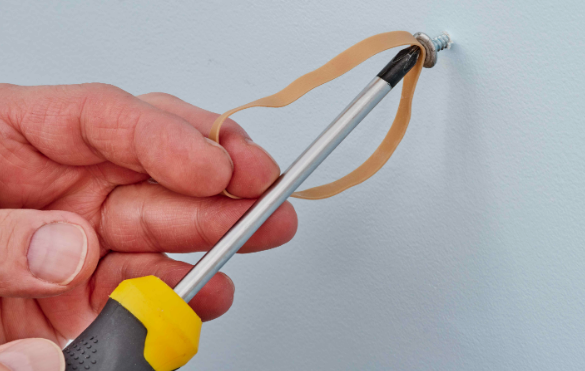
Method 2: Use a Rubber Band for Extra Grip
One of the easiest DIY solutions involves an ordinary rubber band.
Steps
- Place a thick rubber band over the screw head.
- Push the screwdriver firmly into the rubber.
- Maintain downward pressure.
- Turn slowly.
The rubber fills small gaps inside the damaged screw head, improving grip.
Best for:
- Lightly stripped Phillips screws
- Furniture repairs
- Cabinet hardware
Method 3: Try a Larger Screwdriver Bit
Sometimes the damaged recess becomes slightly oversized.
Try:
- One size larger Phillips
- Slightly larger Torx
- Larger square bit
Tap the bit gently into the screw using a hammer before turning.
The tighter fit may provide enough grip.
Method 4: Use Locking Pliers
If part of the screw head protrudes above the surface, locking pliers work extremely well.
How to Do It
- Clamp the pliers tightly around the screw.
- Lock them firmly.
- Rotate slowly.
- Work back and forth if resistance is high.
This method avoids additional damage to the screw head.
Works best for:
- Wood screws
- Deck screws
- Large machine screws
Method 5: Cut a New Slot
A rotary tool with a cutting disc can create a fresh slot in the damaged screw.
Steps
- Cut a straight groove across the screw head.
- Insert a flathead screwdriver.
- Turn slowly.
Wear eye protection because cutting wheels create metal sparks.
Ideal for:
- Larger screws
- Steel screws
- Machinery repairs
Method 6: Tap the Screwdriver with a Hammer
Light hammer taps can seat the screwdriver deeper into the damaged recess.
This improves grip and may also help break minor corrosion.
Use controlled taps instead of heavy blows.
Then attempt removal while applying strong downward pressure.
Method 7: Apply Penetrating Oil
If rust is preventing removal, penetrating oil can make a huge difference.
Popular penetrating oils work by loosening corrosion between threads.
Steps
- Spray around the screw.
- Wait 15 to 30 minutes.
- Try removal again.
- Repeat if necessary.
For heavily rusted fasteners, allowing the oil to soak overnight often improves results.
Method 8: Use a Screw Extractor Kit
A screw extractor is the most reliable solution for severely stripped screws.
How It Works
The extractor bites into the damaged screw while turning counterclockwise.
Typical process:
- Drill a pilot hole.
- Insert extractor.
- Turn slowly.
- Remove the screw.
Advantages include:
- High success rate
- Minimal damage
- Professional results
Ideal for:
- Automotive repairs
- Machinery
- Construction projects
Method 9: Drill Out the Screw
When nothing else works, drilling becomes the final option.
Basic Process
- Select the correct drill bit.
- Drill into the center.
- Increase bit size gradually.
- Remove remaining material.
After drilling, replace the screw with a new one.
Take your time to avoid enlarging the original hole.
Method 10: Use Left-Hand Drill Bits
Left-hand drill bits rotate in reverse.
As they drill, they sometimes catch the screw and remove it automatically.
Many professionals try this before using extractors because it can save time.
Works especially well on:
- Machine screws
- Metal fasteners
- Automotive bolts
Method 11: Super Glue a Driver Bit
This trick works surprisingly well for lightly stripped screws.
Instructions
- Place a drop of super glue inside the screw head.
- Insert the screwdriver.
- Allow the glue to cure fully.
- Turn slowly.
Use only when replacement of the screw is planned since glue residue remains.
Method 12: Use an Impact Driver
Manual impact drivers convert hammer strikes into rotational force.
Benefits include:
- Better grip
- Less slipping
- Extra torque
- Reduced head damage
Excellent for:
- Rusted screws
- Outdoor hardware
- Vehicle repairs
Method 13: Use Heat Carefully
Heat expands metal and can loosen seized threads.
Use:
- Heat gun
- Small butane torch (metal applications only)
Never use open flames near:
- Plastic
- Electronics
- Flammable materials
- Painted surfaces
Allow the screw to cool slightly before attempting removal.
Method 14: Remove the Surrounding Material
In woodworking, removing a small amount of surrounding wood may expose enough of the screw for pliers to grip.
After removal, repair the hole using:
- Wood filler
- Dowels
- Epoxy
This method is often preferable to drilling out decorative hardware.
Method 15: Weld a Nut to the Screw
Professional mechanics often weld a nut onto severely damaged screws or bolts.
Advantages include:
- Creates a new gripping surface
- Heat breaks rust
- High success rate
This method requires welding equipment and experience.
Which Removal Method Works Best?
| Screw Condition | Recommended Method |
|---|---|
| Slightly stripped | Correct screwdriver |
| Mild damage | Rubber band |
| Rounded head | Larger bit |
| Head exposed | Locking pliers |
| Rusted screw | Penetrating oil |
| Deeply stripped | Screw extractor |
| Completely destroyed | Drill out |
| Automotive repair | Left-hand drill bit |
| Heavy corrosion | Impact driver |
| Industrial applications | Weld a nut |
Mistakes That Make the Problem Worse
Avoid these common errors:
- Using excessive force
- Continuing after the screwdriver slips
- Choosing the wrong bit size
- Using worn-out screwdriver bits
- Drilling off-center
- Skipping penetrating oil on rusted screws
- Rushing the extraction process
- Using cheap extractors that break easily
Patience often prevents additional damage.
How to Prevent Stripped Screws
Good habits reduce the chance of stripped screws significantly.
Always Use the Correct Driver
Ensure the bit fits tightly before applying torque.
Replace Worn Bits
Rounded screwdriver tips slip more easily.
Apply Steady Pressure
Keep the screwdriver straight while turning.
Avoid Over-Tightening
Stop once the screw is snug.
Power drills should have clutch settings adjusted appropriately.
Lubricate Outdoor Screws
A small amount of lubricant or anti-seize compound prevents corrosion.
Buy Quality Fasteners
Premium screws made from hardened steel resist stripping much better than inexpensive alternatives.
Special Tips for Different Materials
Wood
- Avoid excessive torque.
- Use pilot holes.
- Apply wax for easier installation.
Metal
- Use cutting oil.
- Apply penetrating lubricant before removal.
- Consider left-hand drill bits.
Plastic
- Avoid heat.
- Use gentle pressure.
- Prevent cracking by working slowly.
Electronics
- Use precision screwdrivers.
- Avoid excessive force.
- Use magnetic tools to reduce slipping.
When Should You Replace the Screw?
Replace the screw if:
- Threads are damaged
- Head is severely rounded
- Rust has weakened the metal
- The screw bent during removal
- The extractor damaged the screw
Reusing damaged screws increases the chance of future failures.
Safety Tips
Always prioritize safety while working.
Remember to:
- Wear safety glasses
- Protect your hands with gloves
- Secure the workpiece
- Disconnect power tools before changing bits
- Keep children away from the work area
- Drill slowly to prevent slipping
Taking a few precautions can prevent injuries and protect your project.
Frequently Asked Questions
Can I remove a stripped screw without special tools?
Yes. Mildly stripped screws can often be removed using a rubber band, a properly sized screwdriver, locking pliers, or by cutting a new slot with a rotary tool. These methods are effective for many common household repairs.
What is the easiest way to remove a stripped screw?
Using a rubber band with the correct screwdriver is usually the quickest and easiest method when the screw head is only slightly damaged.
Do screw extractor kits really work?
Yes. High-quality screw extractor kits are one of the most reliable solutions for severely stripped screws. They are commonly used by mechanics, contractors, and experienced DIYers.
Should I drill out a stripped screw immediately?
No. Drilling should be considered a last resort after simpler methods such as rubber bands, pliers, penetrating oil, or extractors have failed.
Why do stripped screws keep happening?
The most common causes include using the wrong screwdriver, applying too much torque, worn driver bits, rust, and low-quality screws. Using the correct tools and avoiding over-tightening greatly reduces the risk.
Conclusion
Removing a stripped screw doesn’t have to mean replacing an entire piece of furniture or abandoning a repair. In most cases, simple techniques like using a properly sized screwdriver, adding grip with a rubber band, applying penetrating oil, or gripping the head with locking pliers are enough to solve the problem. For stubborn fasteners, screw extractors, left-hand drill bits, and controlled drilling provide dependable solutions.
The key is choosing the right method based on the condition of the screw and working patiently without causing additional damage. With the techniques covered in this guide, you’ll be prepared to tackle everything from minor household repairs to demanding mechanical projects while preventing stripped screws from becoming a recurring problem.
Related Posts
Milwaukee Tools Ace Clearance

Bob Vila 2025: Net Worth, Career, TV Legacy, Latest Projects, and Home Improvement Influence