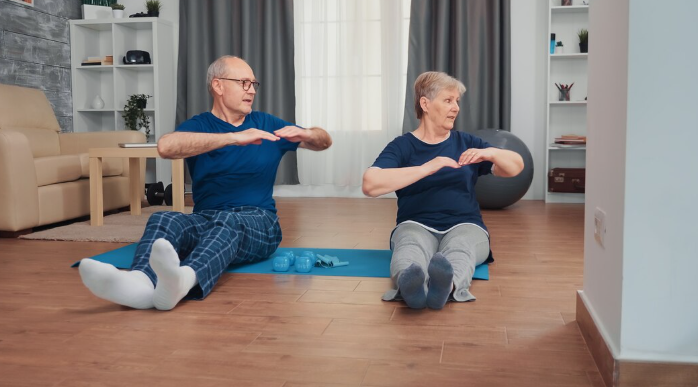
Leg Exercises for the Elderly: Safe Strength, Balance, and Mobility Exercises
Strong legs are important for walking, climbing stairs, getting out of a chair, and maintaining independence as we age. The leg exercises for the elderly should focus on improving strength, balance, flexibility, and everyday movement rather than simply building muscle. Simple exercises performed with a chair, wall, or other stable support can be adapted to different fitness levels and incorporated into a regular routine.
Why Leg Strength Matters as You Age
Leg strength naturally becomes more important as daily activities become more challenging. Stronger muscles can make it easier to stand, walk, climb stairs, get into a vehicle, and perform household tasks.
Regular physical activity can also support physical function and independence. For adults age 65 and older, the CDC recommends a combination of aerobic activity, muscle-strengthening activity, and balance exercises each week.
Lower-body exercises are particularly useful because the legs and hips play a major role in stability and movement.
Benefits of Lower-Body Exercise
A consistent routine may help:
- Improve leg and hip strength
- Support better balance
- Maintain mobility
- Make everyday activities easier
- Improve confidence when walking
- Support bone and muscle health
- Reduce the risk of functional limitations
- Improve coordination
- Support independence
Exercise should be adapted to individual abilities, especially for people who have health conditions, previous injuries, or significant mobility limitations.
8 Gentle Leg Exercises to Try
The following movements can be performed at home with minimal equipment. A sturdy chair can provide support during standing exercises.
| Exercise | Main Focus | Beginner Starting Point |
|---|---|---|
| Sit-to-stand | Thighs and hips | 5–10 repetitions |
| Seated knee extension | Front thighs | 8–12 each leg |
| Heel raises | Calves and ankles | 8–15 repetitions |
| Standing leg curls | Back of thighs | 8–12 each leg |
| Side leg lifts | Hips | 8–12 each side |
| Supported mini squats | Thighs and hips | 5–10 repetitions |
| Seated marching | Hips and thighs | 10–15 each side |
| Supported balance stance | Balance and stability | 10–20 seconds |
The appropriate number of repetitions depends on fitness level and medical considerations. The goal should be controlled movement rather than rushing through a large number of repetitions.
1. Sit-to-Stand
Sit-to-stand is one of the most practical lower-body exercises because it closely resembles an everyday movement.
How to Do It
- Sit toward the front of a sturdy chair.
- Place your feet approximately hip-width apart.
- Lean forward slightly while keeping your back comfortable.
- Push through your feet and stand up slowly.
- Pause briefly.
- Slowly lower yourself back into the chair.
Use your hands on the chair or armrests if needed.
As strength improves, try performing the movement with less assistance from your arms.
Why It Helps
This movement works the thighs and hips while practicing a skill used throughout the day. Chair-rise exercises are also included among balance and functional activities recommended for older adults.
2. Seated Knee Extensions
This is a simple exercise for strengthening the front of the thighs while remaining seated.
How to Do It
Sit upright in a sturdy chair with your feet on the floor.
Slowly straighten one knee until the leg is comfortably extended. Hold briefly, then lower the foot back down.
Repeat with the opposite leg.
Aim for controlled movements rather than locking the knee forcefully.
Making It Easier
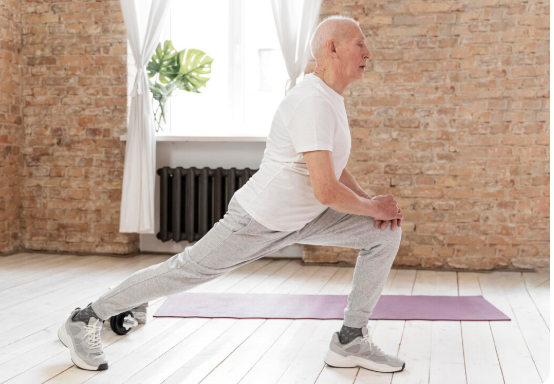
If your legs fatigue quickly, start with only a few repetitions per side and gradually increase them.
An ankle weight should only be added when the movement is comfortable and appropriate for your fitness level.
3. Heel Raises
Heel raises strengthen the calf muscles and can also help develop ankle control.
How to Do It
- Stand behind a sturdy chair.
- Hold the chair lightly for support.
- Keep your feet about hip-width apart.
- Slowly raise your heels so you rise onto the balls of your feet.
- Pause briefly.
- Lower your heels slowly.
Avoid bouncing.
Why Calf Strength Matters
The calves contribute to walking, pushing off the ground, and maintaining stability. Stronger lower legs can contribute to better overall movement.
4. Standing Leg Curls
Standing leg curls target the muscles at the back of the thighs.
How to Do It
Stand behind a sturdy chair and hold it for balance.
Bend one knee and bring your heel gently toward your buttocks. Keep your thighs relatively close together rather than moving the entire leg forward.
Lower the foot slowly and repeat on the other side.
Beginner Tip
Start with a small range of motion if your knees or hips feel stiff. You do not need to bring your heel all the way up to get started.
5. Side Leg Lifts
Side leg lifts work the muscles around the hips, which are important for stability during walking and changing direction.
How to Do It
Stand behind or beside a sturdy chair.
Keep your torso upright and slowly move one leg out to the side. Avoid leaning your body in the opposite direction.
Return the leg to its starting position and repeat.
Switch sides after completing your repetitions.
Why Hip Strength Matters
The muscles around the hips help stabilize the pelvis while walking. Strengthening them can be a useful part of a broader balance and mobility routine.
6. Supported Mini Squats
Mini squats can strengthen the thighs and hips without requiring the depth of a traditional squat.
How to Do It
- Stand behind a sturdy chair.
- Place your feet comfortably apart.
- Hold the chair for support.
- Bend your knees slightly and push your hips backward.
- Keep the movement shallow.
- Return to standing.
You do not need to squat deeply.
The goal is to maintain control throughout the movement.
7. Seated Marching
Seated marching is a useful option for people who are not comfortable with prolonged standing.
How to Do It
Sit upright in a sturdy chair with both feet on the floor.
Lift one knee several inches, lower it, and then lift the opposite knee.
Continue alternating legs at a comfortable pace.
Benefits
This exercise works the hip flexors and thighs while also encouraging coordination. It can be particularly useful as a gentle warm-up before standing exercises.
8. Supported Balance Stance
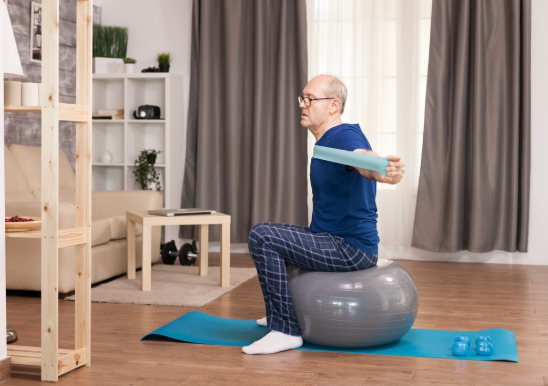
Balance training is an important part of an older adult’s fitness routine. The CDC specifically recommends activities that improve balance for adults 65 and older.
How to Do It
Stand near a sturdy counter or chair.
Place your feet comfortably apart and hold the support if necessary.
Try maintaining your position for 10–20 seconds.
As balance improves, you can gradually reduce how much you rely on your hands, but only when it feels safe.
Safety First
Never practice challenging balance exercises near furniture that could tip over. A stable surface should always be within easy reach.
How to Create a Simple Lower-Body Routine
You do not need to perform every exercise in one session.
A beginner routine could include:
- Seated marching — 10 repetitions per side
- Sit-to-stand — 5 repetitions
- Seated knee extensions — 8 repetitions per side
- Heel raises — 10 repetitions
- Side leg lifts — 8 repetitions per side
- Supported balance stance — 10–20 seconds
Rest between exercises whenever necessary.
As your strength improves, you can gradually increase repetitions or add another set. The CDC notes that older adults can use activities such as weights, resistance bands, and body-weight exercises for muscle strengthening, with 8–12 repetitions commonly used as a starting range for strength exercises.
How Often Should Older Adults Exercise Their Legs?
There is no universal schedule that works for everyone.
For generally healthy adults age 65 and older, national guidelines recommend muscle-strengthening activities on at least two days per week, alongside aerobic and balance activities.
A simple weekly schedule might look like this:
| Day | Activity |
|---|---|
| Monday | Lower-body strength + balance |
| Tuesday | Walking or another comfortable aerobic activity |
| Wednesday | Light mobility |
| Thursday | Lower-body strength + balance |
| Friday | Walking |
| Saturday | Gentle mobility or recreational activity |
| Sunday | Rest or easy movement |
The exact schedule can be adjusted according to fitness, recovery, and medical needs.
Tips for Exercising Safely
Safety should come before increasing repetitions or resistance.
Use Stable Support
When performing standing movements, use a sturdy chair, countertop, or another stable surface.
Do not use lightweight furniture that can slide or tip.
Move Slowly
Controlled repetitions are generally more useful than fast movements. Slow exercise also makes it easier to notice discomfort and maintain good form.
Wear Appropriate Shoes
Wear comfortable, secure footwear that provides adequate traction.
Avoid exercising on slippery floors.
Keep the Area Clear
Remove loose rugs, clutter, cords, and other tripping hazards before exercising.
Fall prevention is especially important for older adults. The CDC recommends strength and balance exercises as part of fall-prevention strategies.
Listen to Your Body
Mild muscle effort can be normal when exercising, but sharp or significant pain should not be ignored.
Stop an exercise if you experience concerning pain, dizziness, unusual shortness of breath, or other symptoms.
How to Make Exercises Easier
Not everyone should begin with standing exercises.
If mobility is limited, start with seated movements such as:
- Seated marching
- Knee extensions
- Ankle movements
- Gentle seated leg lifts
Perform fewer repetitions and take longer rest periods if needed.
A physical therapist or qualified exercise professional can help modify exercises for people with specific mobility challenges.
How to Make Exercises More Challenging
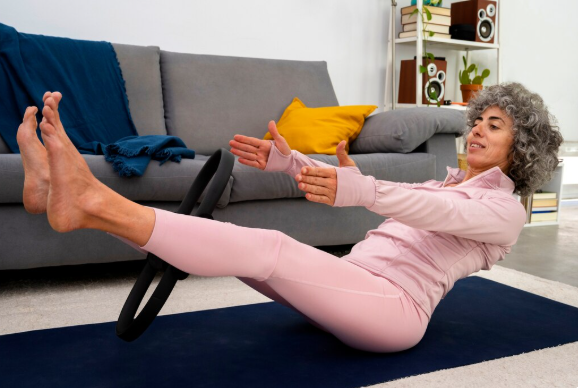
Once basic movements become comfortable, progression can be gradual.
You might:
- Add repetitions
- Add another set
- Increase the range of motion
- Use a resistance band
- Add light weights
- Reduce reliance on chair support
- Increase walking time
- Introduce more balance exercises
Progress should be gradual rather than sudden.
If an exercise becomes easy, increasing the challenge slightly can provide additional stimulus for the muscles. Muscle-strengthening activity can help maintain or increase muscle strength and mass as people age.
Common Mistakes to Avoid
Trying to Do Too Much Too Soon
Starting with a large workout can leave you excessively tired or sore. Begin with manageable movements.
Ignoring Balance
Leg strength is important, but balance is also essential for safe movement. A well-rounded routine should address both.
Holding Your Breath
Remember to breathe naturally throughout each repetition.
Using Poor Form
Do not sacrifice controlled movement simply to complete more repetitions.
Exercising Through Significant Pain
Pain can indicate that an exercise needs to be modified or stopped. If you have persistent pain or a known injury, seek appropriate professional guidance.
When to Talk to a Healthcare Professional
People with chronic health conditions, recent surgery, significant joint problems, osteoporosis, neurological conditions, or a history of falls may need an individualized exercise program.
The CDC recommends that people with chronic conditions or disabilities consult a healthcare professional or physical activity specialist about appropriate types and amounts of activity when needed.
Professional guidance can help determine which movements are appropriate and how much resistance or activity is suitable.
Key Points to Remember
- Strong legs support walking, standing, and everyday independence.
- Start with simple movements and progress gradually.
- Sit-to-stands are especially useful for practicing functional strength.
- Chair-supported exercises can make standing movements safer.
- Balance training should be part of a well-rounded routine.
- Perform movements slowly and with control.
- Use stable furniture for support.
- Stop if you experience significant pain, dizziness, or unusual symptoms.
- Older adults should generally include muscle-strengthening and balance activities as part of their weekly physical activity.
- Individual health conditions may require personalized exercise guidance.
Final Thoughts
Maintaining lower-body strength is an important part of staying active and independent as you get older. Exercises such as sit-to-stands, heel raises, knee extensions, side leg lifts, and supported balance movements can be adapted to different fitness levels and performed with little or no equipment.
The best routine is one that is safe, manageable, and consistent. Start with a few exercises, focus on controlled movement, and gradually increase the challenge as your strength and confidence improve. Regular physical activity can support muscle strength, balance, mobility, and independence throughout the aging process.
Frequently Asked Questions
1. What is the easiest leg exercise for an older adult to start with?
Seated marching and seated knee extensions are good starting options because they can be performed while sitting. Sit-to-stands can also be useful when the person can safely stand with appropriate support.
2. How often should older adults strengthen their legs?
Generally healthy adults age 65 and older should include muscle-strengthening activity at least two days each week. The amount and intensity should be adjusted according to individual fitness and health conditions.
3. Can leg exercises help improve balance?
Yes. Strengthening the legs and hips can support stability, while dedicated balance exercises can further improve balance skills. A combination of strength and balance activities is recommended for older adults.
4. Can these exercises be done at home?
Yes. Many lower-body exercises can be performed at home using a sturdy chair or countertop for support. Make sure the exercise area is clear of trip hazards and that any furniture used for support is stable.
5. Should an older adult exercise if they have knee or hip pain?
They should not automatically exercise through significant pain. Gentle movement may be appropriate for some conditions, but anyone with persistent or severe joint pain should discuss suitable exercises with a healthcare professional or physical therapist.
One thought on “Leg Exercises for the Elderly: Safe Strength, Balance, and Mobility Exercises”