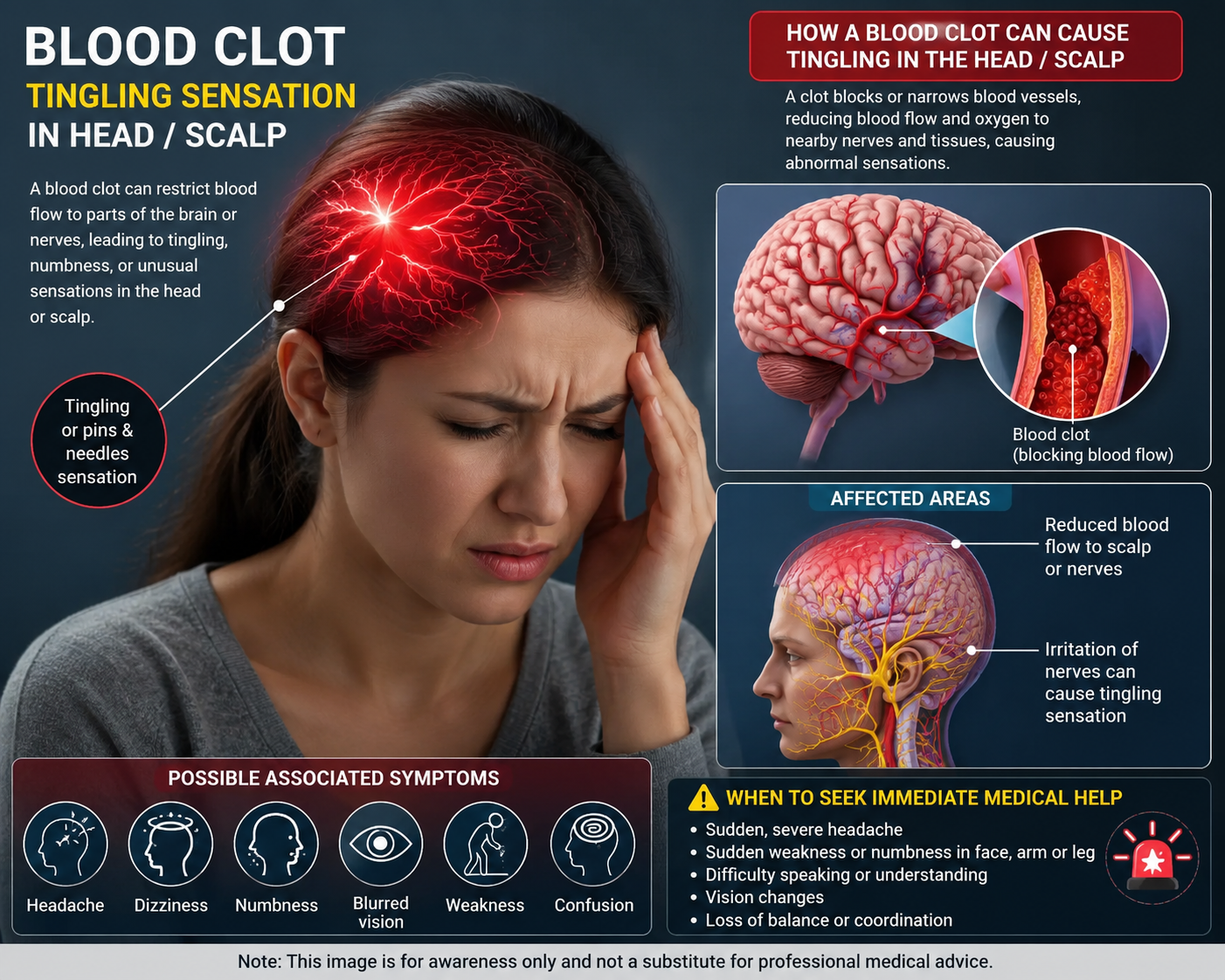
Blood Clot Tingling Sensation in Head Scalp
A tingling sensation in the head or scalp can be unsettling. Many people immediately wonder whether it could be a sign of a blood clot or another serious medical condition. While scalp tingling is often linked to harmless issues such as nerve irritation, anxiety, migraines, or muscle tension, it can occasionally accompany a medical emergency such as a stroke caused by a blood clot.
Understanding the difference between common causes and emergency warning signs is essential. This guide explains whether a blood clot can cause tingling in the scalp, what symptoms require immediate attention, how doctors diagnose the problem, and the treatments available. If you experience sudden neurological symptoms along with scalp tingling, seeking emergency medical care could save your life.
Can a Blood Clot Cause Tingling in the Head or Scalp?
Yes, but it is uncommon.
A blood clot itself does not usually cause tingling only in the scalp. However, if a blood clot blocks blood flow to the brain, it can cause a stroke, and tingling or numbness may occur as one of several neurological symptoms.
Most cases of scalp tingling are not caused by blood clots. Instead, they are related to temporary nerve irritation, stress, headaches, or skin conditions.
The concern arises when tingling occurs alongside symptoms such as:
- Sudden weakness on one side of the body
- Facial drooping
- Difficulty speaking
- Confusion
- Loss of balance
- Sudden severe headache
- Vision changes
These symptoms require immediate emergency evaluation.
How Blood Clots Affect the Brain
The brain depends on a continuous supply of oxygen-rich blood.
When a blood clot blocks an artery, brain tissue begins losing oxygen within minutes. Depending on the affected area, symptoms may include:
- Numbness
- Tingling
- Weakness
- Difficulty walking
- Vision loss
- Trouble understanding speech
- Confusion
The tingling may affect the face, scalp, arm, or leg rather than remaining isolated to the scalp.
Prompt treatment significantly improves recovery.
What Does Scalp Tingling Feel Like?
People describe scalp tingling in different ways, including:
- Pins and needles
- Mild burning sensation
- Crawling feeling
- Electric shock-like sensation
- Tightness
- Numb patches
- Tickling sensation
The feeling may come and go or persist for hours depending on the underlying cause.
Common Causes of Tingling in the Head or Scalp
Fortunately, blood clots are far from the most common explanation.
Anxiety and Stress
Stress activates the body’s fight-or-flight response.
This can cause:
- Muscle tension
- Rapid breathing
- Temporary nerve sensitivity
- Tingling in the scalp
- Facial tingling
- Neck tightness
Symptoms often improve after relaxation.
Migraine
Some migraines produce neurological symptoms called aura.
These may include:
- Tingling
- Visual disturbances
- Numbness
- Difficulty speaking
- Temporary weakness
Aura usually develops before or during the headache.
Occipital Neuralgia
The occipital nerves run from the upper neck to the scalp.
When irritated, they may produce:
- Sharp pain
- Tingling
- Burning
- Sensitivity on the back of the head
Pain often worsens with head movement.
Cervical Spine Problems
Neck arthritis, disc problems, or pinched nerves may affect scalp sensation.
Symptoms include:
- Neck pain
- Shoulder discomfort
- Tingling extending into the scalp
- Headaches
Scalp Conditions
Skin disorders may irritate tiny nerves.
Examples include:
- Psoriasis
- Eczema
- Allergic reactions
- Dry skin
- Fungal infections
These usually occur with itching or visible skin changes.
Diabetes
Long-term diabetes can damage nerves.
Although it commonly affects the feet and hands first, some individuals experience tingling in other body regions.
Multiple Sclerosis
Multiple sclerosis affects the protective covering around nerves.
Possible symptoms include:
- Tingling
- Numbness
- Weakness
- Vision problems
- Fatigue
- Balance issues
Symptoms often come and go.
Vitamin Deficiencies
Low levels of:
- Vitamin B12
- Vitamin B6
- Vitamin E
may contribute to nerve-related tingling sensations.
Blood Clot Warning Signs You Should Never Ignore
Although isolated scalp tingling rarely indicates a blood clot, certain symptoms demand immediate medical attention.
Seek emergency care if tingling develops suddenly with:
- Facial drooping
- Arm weakness
- Leg weakness
- Slurred speech
- Difficulty understanding language
- Sudden confusion
- Vision loss
- Severe headache unlike previous headaches
- Loss of coordination
- Difficulty walking
- Loss of consciousness
These could indicate a stroke requiring urgent treatment.
FAST: The Simple Stroke Recognition Test
Doctors recommend remembering FAST.
| Letter | Meaning |
|---|---|
| F | Face drooping |
| A | Arm weakness |
| S | Speech difficulty |
| T | Time to call emergency services immediately |
Every minute matters because brain cells begin dying quickly after blood flow stops.
Can a Blood Clot Cause Tingling Without Pain?
Yes.
Many strokes are painless.
Some people experience only:
- Numbness
- Tingling
- Weakness
- Difficulty speaking
Pain is not required for a stroke diagnosis.
That is why sudden neurological symptoms should never be ignored.
Risk Factors for Blood Clots
Certain conditions increase clot risk.
These include:
- High blood pressure
- Smoking
- Diabetes
- High cholesterol
- Obesity
- Heart disease
- Atrial fibrillation
- Previous stroke
- Family history
- Pregnancy
- Certain medications
- Long periods of immobility
- Cancer
Managing these conditions helps lower stroke risk.
How Doctors Diagnose the Cause
Evaluation begins with a thorough medical history and physical examination.
Depending on symptoms, testing may include:
Neurological Examination
Doctors assess:
- Muscle strength
- Reflexes
- Coordination
- Balance
- Sensation
- Vision
- Speech
CT Scan
A CT scan quickly identifies:
- Bleeding
- Stroke
- Brain swelling
It is often the first imaging test in emergencies.
MRI
MRI provides more detailed images of brain tissue.
It detects:
- Small strokes
- Nerve disorders
- Multiple sclerosis
- Tumors
CT Angiography
This imaging test evaluates blood vessels for:
- Blood clots
- Narrowed arteries
- Blockages
Blood Tests
Doctors may check:
- Blood sugar
- Cholesterol
- Blood clotting factors
- Vitamin deficiencies
- Infection markers
Heart Evaluation
Heart rhythm abnormalities can cause blood clots that travel to the brain.
Testing may include:
- ECG
- Echocardiogram
- Heart rhythm monitoring
Treatment Depends on the Cause
Treatment varies depending on the diagnosis.
If a Blood Clot Causes Stroke
Emergency treatment may include:
- Clot-dissolving medication
- Mechanical clot removal
- Blood thinners
- Blood pressure management
- Rehabilitation
Treatment is most effective when started within the first few hours.
If Anxiety Is Responsible
Management may involve:
- Stress reduction
- Counseling
- Relaxation exercises
- Medication when appropriate
If Nerve Compression Is the Cause
Treatment may include:
- Physical therapy
- Anti-inflammatory medication
- Posture correction
- Stretching exercises
If Migraine Is Diagnosed
Doctors may recommend:
- Migraine medications
- Trigger avoidance
- Preventive treatment
- Lifestyle adjustments
If Vitamin Deficiency Exists
Treatment focuses on replacing the missing nutrient while identifying the underlying cause.
Home Care for Mild Scalp Tingling
If your healthcare provider rules out serious conditions, these strategies may help.
- Stay hydrated.
- Get adequate sleep.
- Reduce stress.
- Maintain good posture.
- Stretch neck muscles.
- Limit excessive screen time.
- Eat a balanced diet.
- Exercise regularly.
- Avoid smoking.
- Manage chronic medical conditions.
Persistent or worsening symptoms should always be re-evaluated.
When Should You Go to the Emergency Room?
Go to the emergency department immediately if scalp tingling occurs with:
- Sudden weakness
- One-sided numbness
- Speech changes
- Vision loss
- Severe headache
- Confusion
- Difficulty walking
- Loss of consciousness
Do not wait to see if symptoms improve.
Rapid treatment can reduce permanent brain damage.
Can Anxiety Mimic a Stroke?
Yes.
Anxiety and panic attacks sometimes produce symptoms resembling stroke.
Possible symptoms include:
- Tingling
- Dizziness
- Chest discomfort
- Rapid heartbeat
- Trembling
- Shortness of breath
However, because strokes and anxiety can appear similar, sudden neurological symptoms should always be evaluated by a healthcare professional.
Preventing Blood Clots and Stroke
Healthy habits reduce overall stroke risk.
Consider these preventive measures:
- Control blood pressure.
- Keep cholesterol within target ranges.
- Exercise regularly.
- Maintain a healthy weight.
- Stop smoking.
- Limit alcohol intake.
- Eat more fruits, vegetables, and whole grains.
- Manage diabetes carefully.
- Take prescribed medications consistently.
- Attend regular health checkups.
Small lifestyle improvements can significantly lower long-term risk.
Frequently Asked Questions
Can a blood clot start with tingling in the scalp?
It is possible but uncommon. Blood clot-related strokes usually cause additional symptoms such as weakness, numbness, speech difficulty, facial drooping, or vision changes rather than isolated scalp tingling.
Is scalp tingling always a neurological problem?
No. Anxiety, muscle tension, migraines, skin conditions, allergies, and irritated nerves commonly cause scalp tingling without involving the brain.
How long does stress-related scalp tingling last?
It varies from a few minutes to several hours. Symptoms often improve once stress decreases and breathing returns to normal.
Can dehydration cause tingling in the head?
Yes. Dehydration may contribute to headaches, dizziness, muscle tension, and temporary tingling sensations, particularly if accompanied by electrolyte imbalance.
Should I see a doctor for recurring scalp tingling?
Yes. Persistent, recurring, or worsening tingling deserves medical evaluation, especially if it occurs with weakness, numbness, headaches, vision changes, or other neurological symptoms.
Conclusion
Experiencing a blood clot tingling sensation in head scalp can understandably cause concern, but isolated scalp tingling is much more likely to result from nerve irritation, anxiety, migraines, neck problems, or skin conditions than from a blood clot. The key is recognizing when tingling appears alongside serious neurological symptoms such as facial drooping, weakness, speech problems, confusion, or sudden vision changes. These signs require immediate emergency medical attention because they may indicate a stroke. If scalp tingling persists, recurs frequently, or is accompanied by additional symptoms, schedule an evaluation with a healthcare professional to identify the underlying cause and receive appropriate treatment. Early diagnosis remains the best way to protect both your brain health and your overall well-being.


